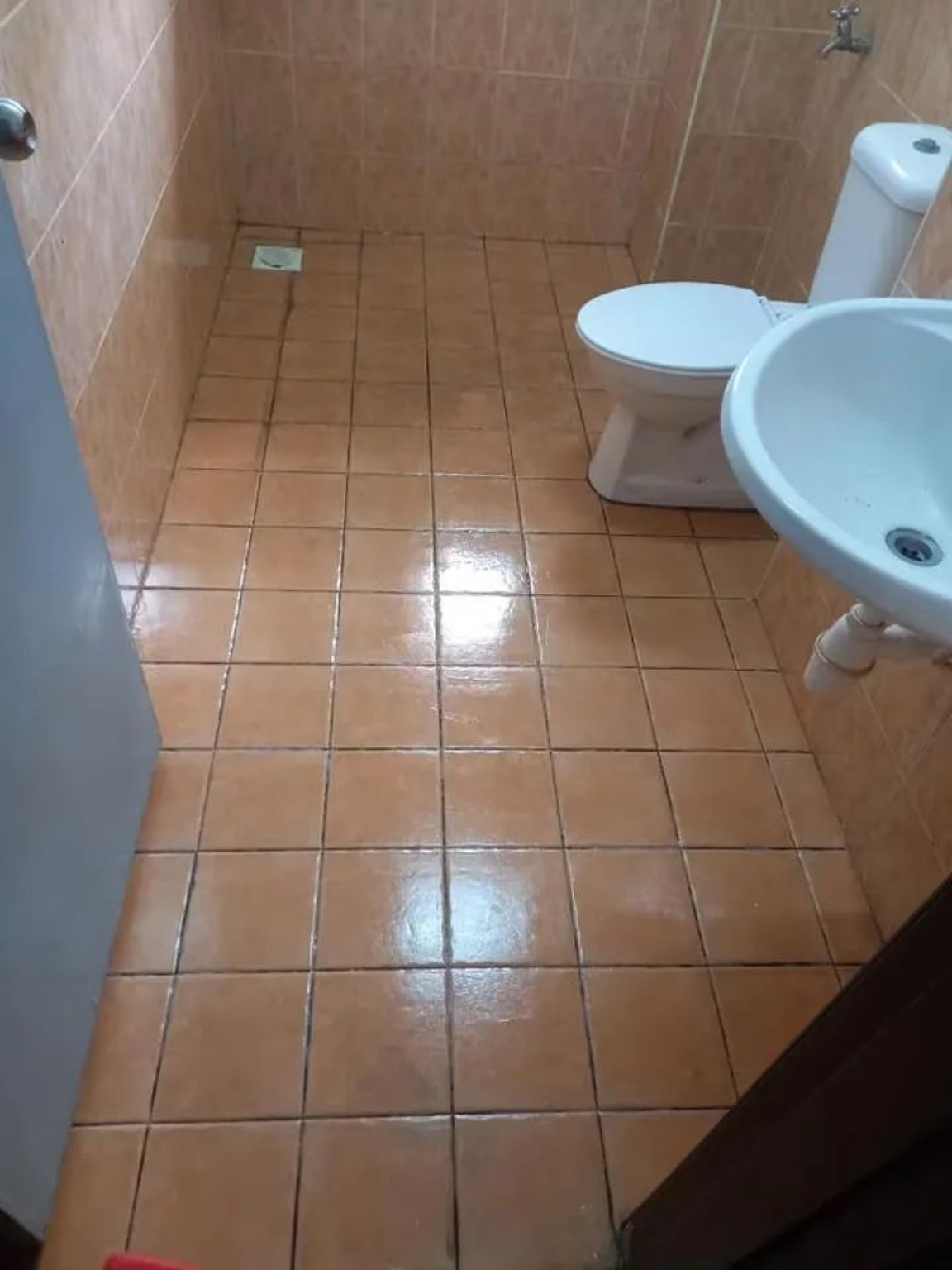
This Field Note documents a no-hack toilet waterproofing and re-grouting project carried out at Permas Jaya, Johor Bahru.
Instead of removing the existing floor tiles, the work focused on restoring the tile joints and treating the areas where water could penetrate through the existing tiled surface.
For this project, the existing grout joints were prepared and re-grouted together with nano waterproofing treatment. Particular attention was also given to the floor trap area, which was temporarily sealed using a CLP water plug before the toilet was handed over.
Existing Toilet Condition and Preparation
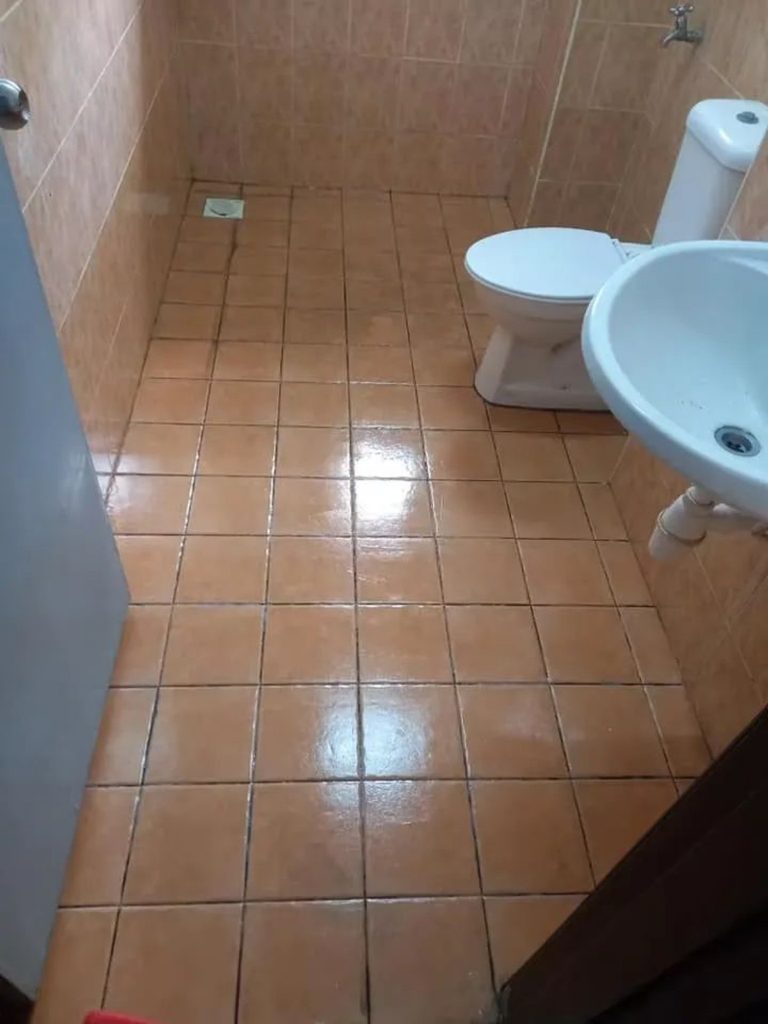
The existing floor tiles were retained because this repair method did not require hacking or removal of the tiled surface.
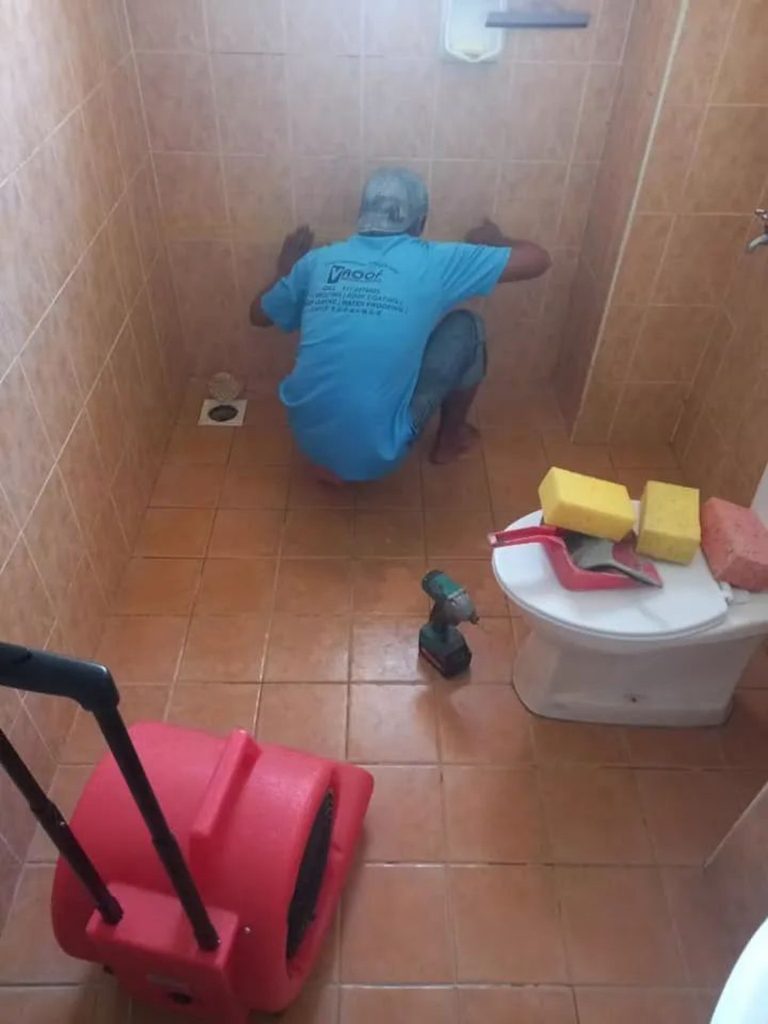
Before re-grouting, the existing grout lines between the tiles were cleaned and prepared using a grout-removal tool. The treatment area was also marked according to the areas exposed to water, with additional attention given to the shower area where water regularly splashes onto the surrounding wall.
Removing and Re-Grouting the Existing Tile Joints
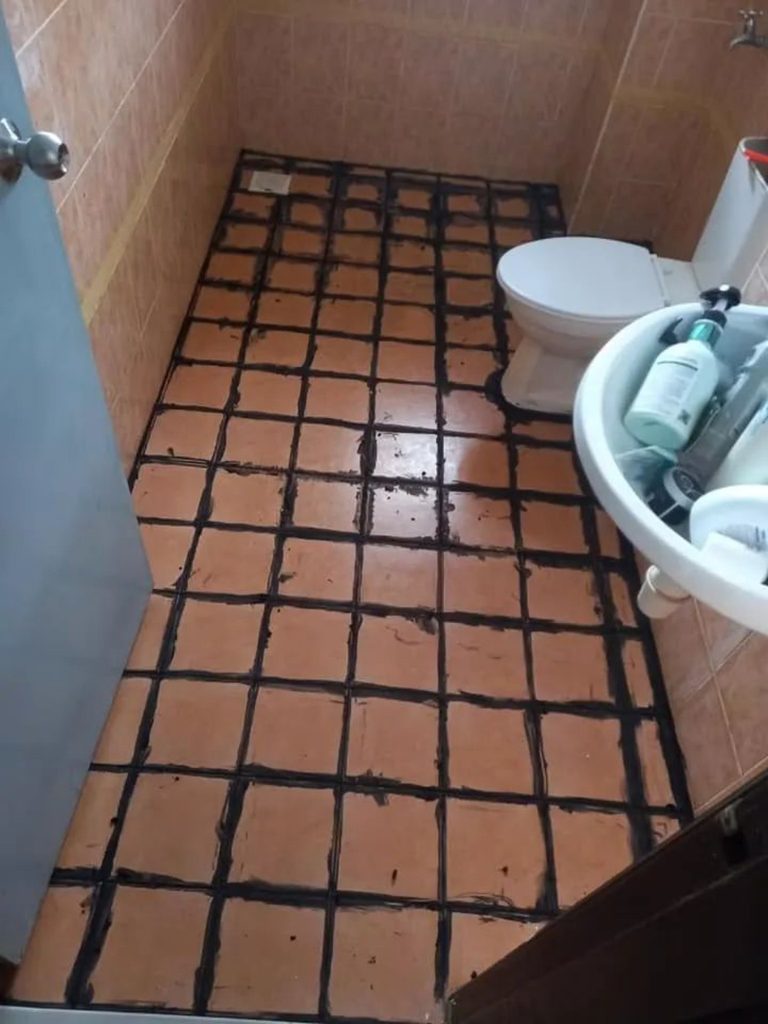
The existing grout between the floor tiles was carefully removed and cleaned to create a suitable joint for the new treatment.
New cement-based grout was then applied between the tiles together with nano waterproofing treatment. For this project, a darker grout finish was selected to suit the original grey joint colour.
Once the re-grouting work was completed and the surface cleaned, nano waterproofing treatment was applied again along the treated grout lines as an additional part of the no-hack waterproofing process.
Floor Trap Water Plug Treatment
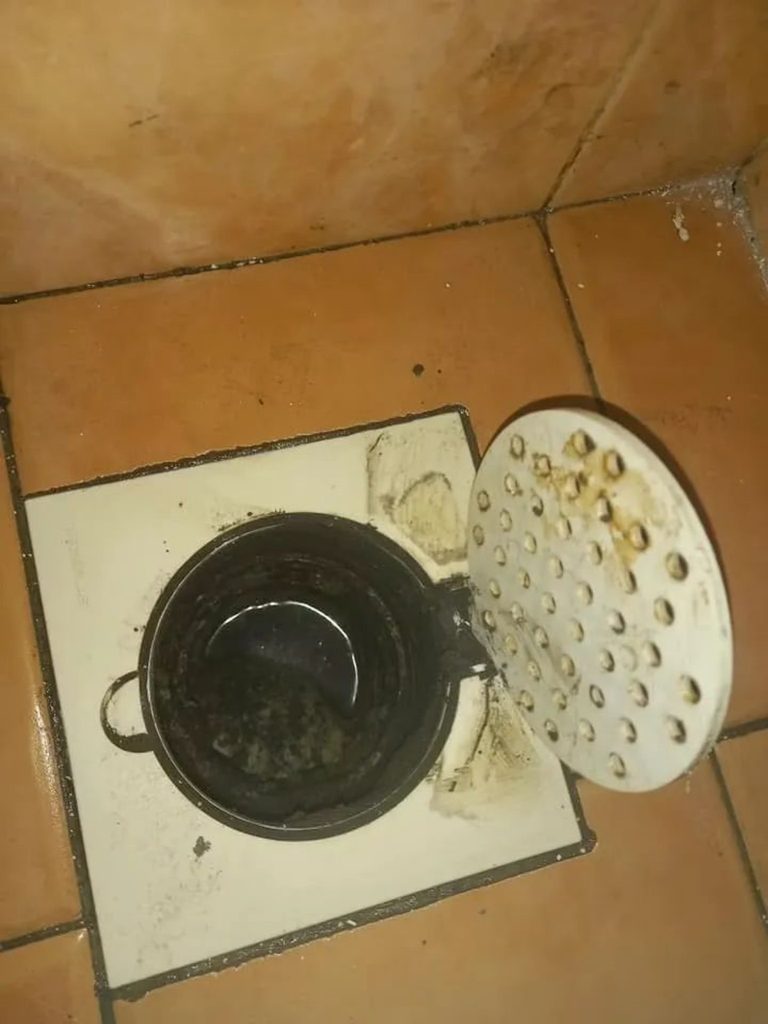
Before the toilet was handed over, the floor trap was temporarily sealed using CLP Water Plug.
CLP Water Plug is a rapid-setting cement-based material that begins to harden quickly after it is mixed with water. Because the material reacts and generates heat while setting, it needs to be mixed and applied promptly with appropriate hand protection.
Temporarily plugging the floor trap allows the treated toilet floor to retain water for a ponding test, helping to check the completed waterproofing treatment before the area is returned to normal use.
Completed No-Hack Waterproofing Treatment
After the re-grouting and nano waterproofing treatment were completed, the floor surface was cleaned and prepared for the final water test.
This no-hack method allowed the existing tiles to remain in place while the tile joints, perimeter areas and floor trap were treated as part of the waterproofing work.
The completed toilet was then left ready for ponding testing before handover.
What This Project Shows
This Permas Jaya project shows that some toilet waterproofing problems can be approached without immediately hacking and replacing the existing floor tiles.
For this project, the treatment focused on the existing tile joints, re-grouting, nano waterproofing treatment and the floor trap area. The appropriate repair method still depends on the actual source and condition of the leakage, so a no-hack treatment should not be treated as a universal solution for every leaking toilet.
For more information about VROOF waterproofing and repair services, visit the VROOF Waterproofing Enterprise official website.
Need Help With a Leaking Toilet?
If you are experiencing toilet leakage or water seepage in Johor Bahru, photos and videos of the affected area can help with an initial assessment before the appropriate repair method is recommended.