Concrete roof slabs are exposed to sunlight, rainfall and changing temperatures throughout the year. Over time, cracks may develop on the concrete surface, creating potential pathways for water to enter the slab.
This waterproofing project in Kulai, Johor, provides a practical example of an aging concrete roof slab with visible surface cracks. Before applying a waterproofing coating system, it is important to understand why cracks develop and how they may contribute to water leakage.
What Causes Cracks in Concrete Roof Slabs?
Concrete roof slabs are continuously exposed to outdoor weather conditions. Although concrete is a strong construction material, several factors can contribute to cracking over time.
1. Temperature Changes and Thermal Movement
During hot weather, concrete absorbs heat and expands. When temperatures drop, the surface cools and contracts.
Repeated expansion and contraction can contribute to stress within the concrete, particularly around joints, corners and areas where different building elements meet.
2. Concrete Shrinkage and Aging
Concrete can develop shrinkage cracks during the curing process. Over the years, weather exposure and deterioration of existing protective layers may make these cracks more noticeable.
Not every visible crack indicates a serious structural problem, but cracks should be assessed before waterproofing work begins.
3. Water Ponding and Drainage Problems
When rainwater remains on a flat roof for extended periods, it increases the exposure of vulnerable joints, cracks and deteriorated waterproofing areas to moisture.
Poor drainage does not necessarily cause every crack, but standing water can increase the risk of leakage where the existing waterproofing protection is inadequate.
4. Movement at Roof and Wall Junctions
Areas where concrete roof slabs meet walls, parapets or other structures require particular attention.
Movement between these building elements can affect joints and existing waterproofing details, potentially creating pathways for water penetration.
How Can Roof Slab Cracks Lead to Water Leakage?
Cracks in a concrete roof slab can create potential pathways for rainwater to enter the structure, particularly when the existing waterproofing layer is damaged, deteriorated or no longer providing adequate protection.
During rainfall, water may collect on the roof surface and enter vulnerable cracks, joints or poorly protected areas. Once moisture penetrates the concrete, it may travel through the slab or along existing weaknesses before appearing as damp patches, water stains or dripping on the ceiling below.
What Did the Kulai Roof Slab Condition Show?
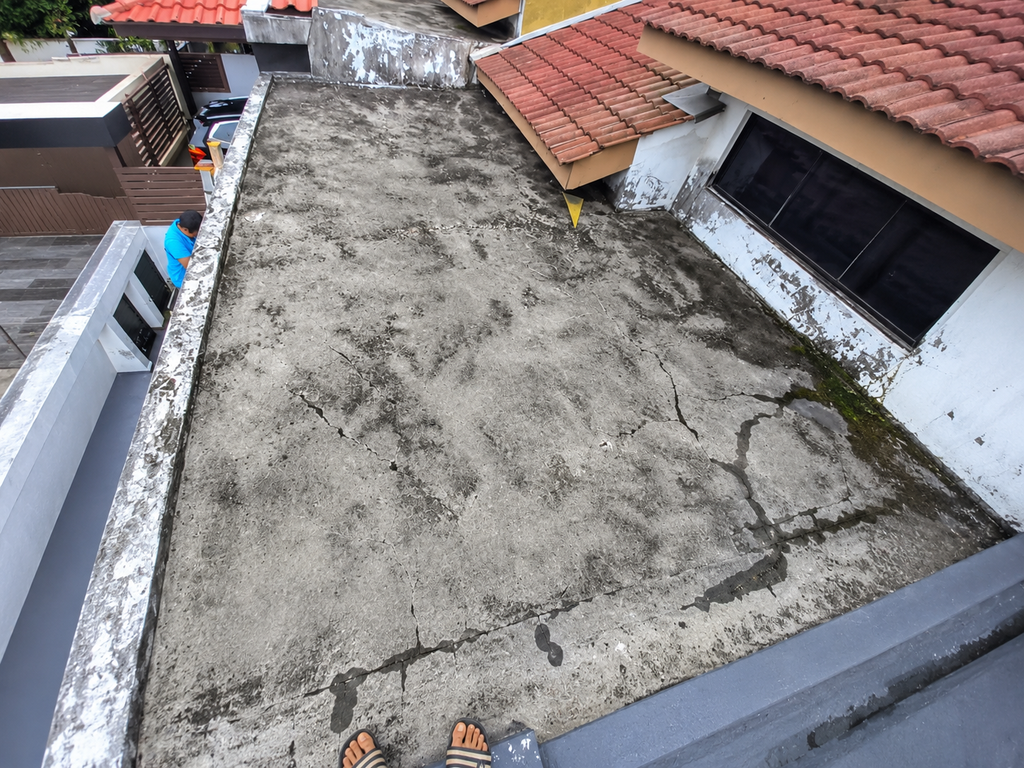
The concrete roof slab at this property in Kulai, Johor, showed visible surface cracks, weathering and areas of discolouration before waterproofing work began.
Some cracks extended across the exposed concrete surface, while other areas showed signs of deterioration associated with prolonged outdoor exposure.
These visible conditions highlighted the importance of assessing the roof surface, existing cracks, drainage and junction details before selecting a suitable waterproofing treatment.
Although cracks can provide potential pathways for water penetration, their appearance alone does not confirm the exact source of a leak. Further assessment may be necessary to determine whether water is entering through the slab, roof junctions or other vulnerable areas.
Why Is Surface Preparation Important Before Waterproofing?
Applying waterproofing coating directly over an unprepared concrete roof slab may not provide reliable long-term protection.
Before waterproofing begins, the roof surface should be assessed for cracks, loose materials, contamination, deteriorated areas and existing waterproofing defects.
Visible cracks and vulnerable junctions may require appropriate repair or detailing before the main waterproofing system is applied.
Proper surface preparation also helps the waterproofing material achieve suitable adhesion to the substrate, reducing the risk of premature coating failure.
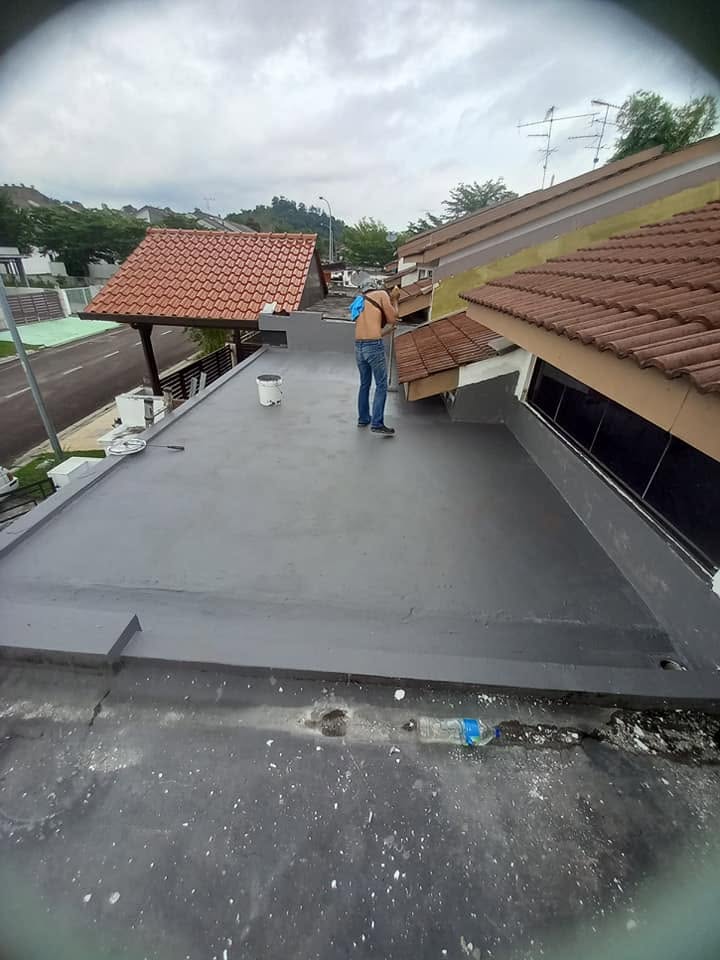
For the Kulai project, the existing roof condition demonstrated why preparation and attention to surface defects are important considerations before waterproofing treatment.
What Homeowners Can Learn from This Kulai Project
The Kulai concrete roof slab project highlights why visible cracks and surface deterioration should not be ignored.
Although not every concrete crack will cause water leakage, damaged surfaces and deteriorated waterproofing protection can increase the risk of water penetration during rainfall.
Homeowners should pay attention to recurring ceiling stains, visible roof cracks, standing water and signs of waterproofing deterioration.
Understanding the possible causes of leakage is an important first step before choosing a suitable repair or waterproofing method.
The key lesson is simple: identifying and addressing vulnerable areas is more important than applying a new waterproofing coating without understanding the existing roof condition.
Need Help With a Leaking Concrete Roof Slab?
If you are experiencing roof leakage, visible concrete cracks or recurring ceiling water stains in Johor Bahru and surrounding areas, VROOF Waterproofing Enterprise provides roof inspection, repair and waterproofing services.
Photos and videos of the affected area can help with an initial assessment before recommending the appropriate next step.
Contact VROOF to discuss your concrete roof slab waterproofing concerns.