VROOF® Technical Knowledge Library · Concrete rooftop repair
A refurbishment sequence for exposed concrete screed roofs.
Clean the surface and drainage
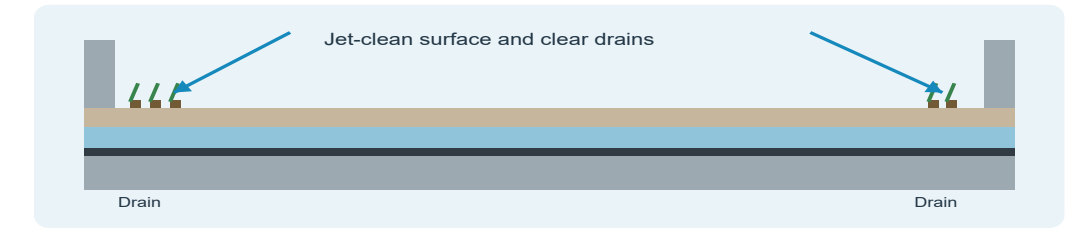
A contractor cleans the exposed screed and removes vegetation and debris from accessible outlets and perimeter drains.
Treat cracks and unstable screed
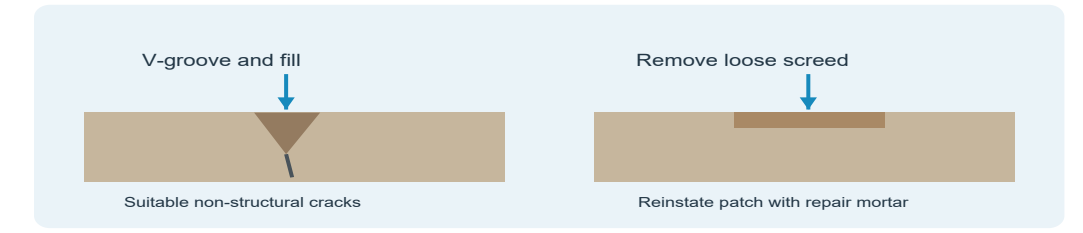
Assess cracks before repair. A suitable non-structural crack can be prepared and filled. Remove loose or hollow screed locally and reinstate it with compatible repair mortar.
Repair perimeter junctions

Remove failed material at affected upturns. Form a compatible angle fillet where the system requires one. Keep concealed layers only where they are sound and compatible.
Correct local ponding and surface falls
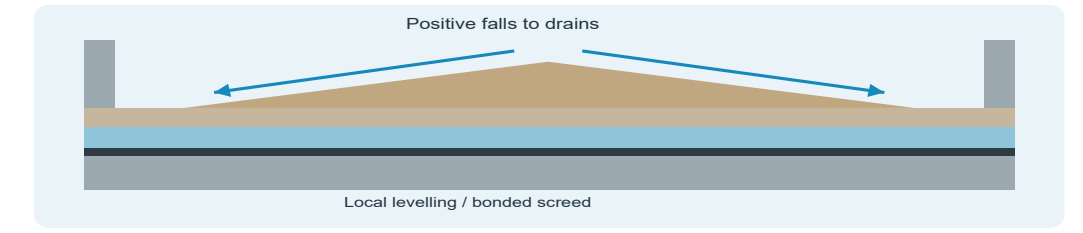
Check the outlet levels, allowable loading and repair thickness before specifying bonded levelling or screed. Provide falls that direct water to the outlets.
Option A · Cementitious waterproofing with a compatible protective coating
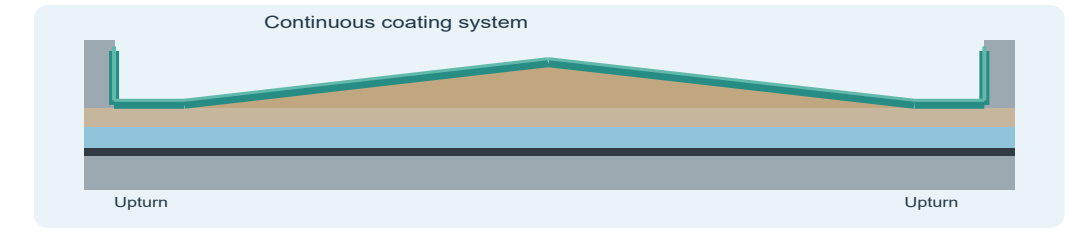
Confirm the coating is compatible with the cementitious waterproofing and the full assembly. Detail upturns, junctions and outlets. Future recoating depends on the condition of the existing system and compatibility with the maintenance coating.
Option B · Mineral-finished torch-on waterproofing membrane with a compatible primer
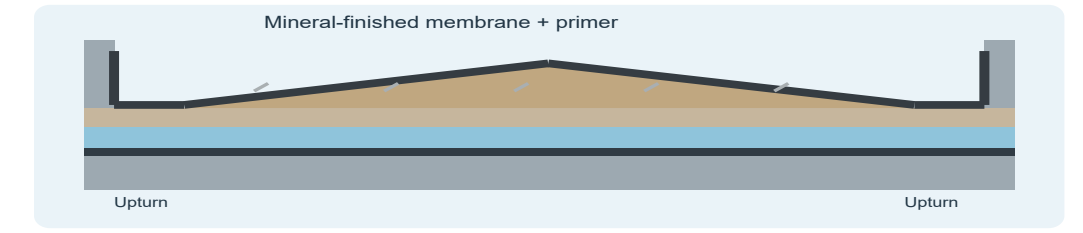
Specify a compatible primer and follow the approved system details for laps and terminations. A qualified contractor should assess concealed combustible materials and hot-work controls before specifying torch application.
After completion, monitor the affected interior areas. Consider targeted PU injection only if investigation identifies a remaining water-bearing concrete crack.
Conceptual illustrations. Verify site conditions and the approved system specification before work.
Related reading
Concrete roof slab waterproofing · Field Notes · Concrete Roof Slab Waterproofing · VROOF®