Yes. If corrosion has eaten through the metal in a roof valley, rainwater can pass beneath the tiles and eventually reach the ceiling. A ceiling stain is a reason to investigate the route the water took. Water can travel along the roof structure before it drips, so the stain may be some distance from the entry point.
What is roof valley flashing?
A valley is the channel where two roof slopes meet. On a tiled roof, the metal flashing that lines this channel carries runoff from both slopes past the cut tile edges and towards the gutter or outlet.
How corrosion affects metal flashing
Surface rust can be visible while the metal is still intact. More advanced corrosion can thin the flashing or create pinholes. The extent of the damage, including the condition of the metal around the affected spot, helps determine whether a local repair or replacement is appropriate.
Why overlaps and water flow matter
Where two lengths of flashing meet, the upper section should overlap the lower section so runoff stays on top of the metal. A lifted or poorly aligned joint can let water underneath. Displaced tiles or debris in the channel can also redirect runoff towards the edges, especially during heavy rain.
Does visible rust always mean the flashing is leaking?
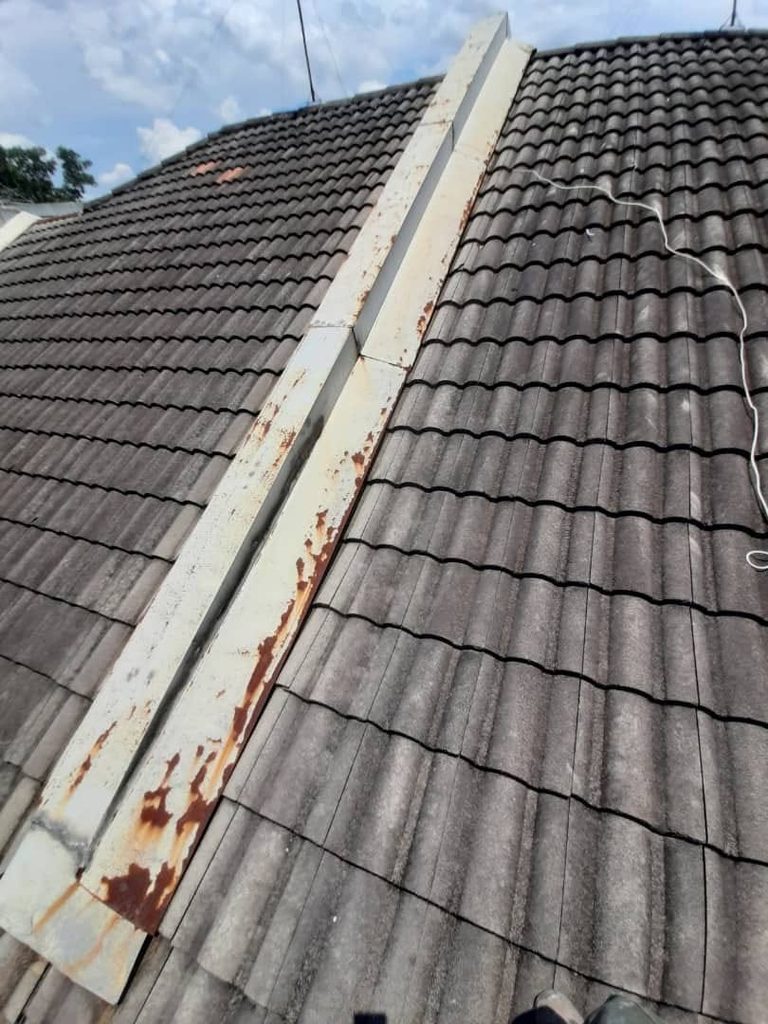
Visible rust alone cannot confirm a leak. In VROOF’s 2020 roof valley inspection in Bandar Baru Uda, the photograph shows rust-coloured patches on the metal between two tiled slopes, including near a visible overlap. The inspection note does not establish that the metal had worn through, that the joint was defective or where water entered. It records an inspection.
When to arrange a roof inspection
Arrange an inspection if a ceiling stain grows or returns after rain, or if you can see a lifted joint, damaged tile or heavily corroded metal from a safe position. Note when the stain appeared and whether it follows heavy or wind-driven rain. Take photos from indoors or ground level and leave roof access to the inspection team.
What to check before recommending repairs
A roofer should trace the likely water path from the ceiling back towards the roof, where access permits. On the roof, check the condition of the valley metal, the overlaps, the tiles along both sides and the runoff path to the gutter or outlet. Nearby wall flashings, roof junctions and penetrations can admit water that shows up in the same area. These checks help determine whether the valley needs work and how much of it is affected.
Identify the leak source before choosing a repair
Start with where and when the leak appears, then check what is happening on the roof. The findings can show whether the work belongs at a tile, an overlap, a drain or the valley flashing itself. For more information, see VROOF’s flashing and roof joint repair service. If you have a recurring leak, you can send VROOF a short description and photos on WhatsApp.