A flat concrete roof still needs a slight slope so rainwater can run towards an outlet. If water collects in a low spot or the outlet cannot drain freely, it can remain on the slab after the rain stops.
What we observed in Bukit Indah
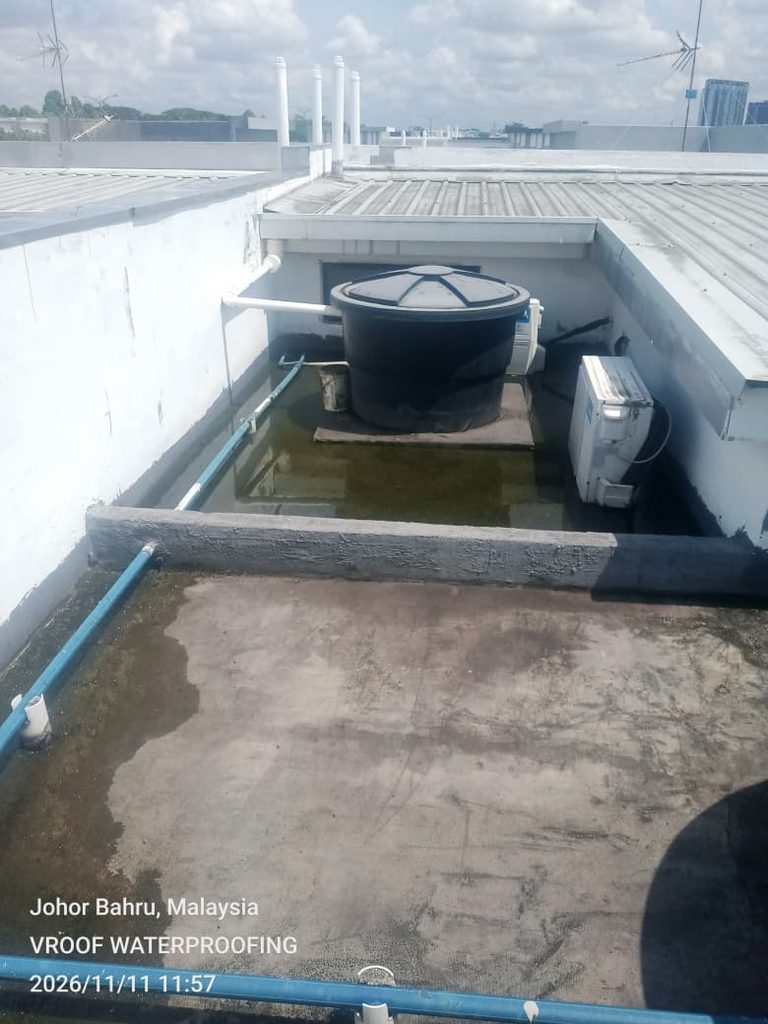
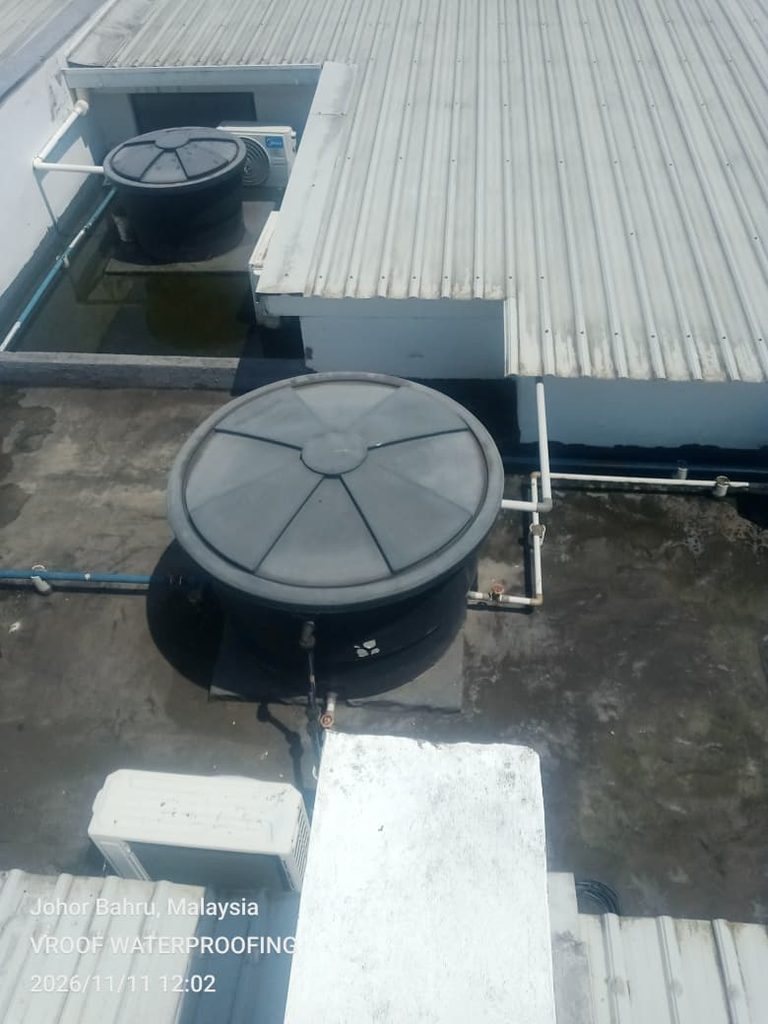
During a November 2026 inspection in Bukit Indah, Johor Bahru, VROOF found standing water on the concrete roof slab. The tenant described it as flooding. We identified and cleared a drainage obstruction during the visit. Outdoor air-conditioning units were near the ponding area, and existing fibremesh was visible.
The drainage and water-flow conditions needed attention. The nearby equipment and visible fibremesh were observations. Neither established where water was entering the building or how well the waterproofing was performing.
Why water may remain after rain
Once rain stops, water can stay in shallow depressions, behind raised details or on parts of the slab that fall away from the outlet. Debris or an obstruction in the outlet can also slow drainage. The pattern matters. A puddle in one low spot tells a roofer something different from water backing up around the outlet.
How blocked drainage affects the roof
When an outlet is obstructed, water can spread across a larger area and remain against joints, upstands and penetrations for longer. A separate defect at one of those details may allow water in. Ponding describes where water remains, obstruction describes why it may drain slowly, and a waterproofing defect is a potential path into the building. Clearing the obstruction addressed the immediate drainage issue observed on site. The inspection did not establish a waterproofing failure or document a completed waterproofing repair.
When to arrange an inspection
Arrange an inspection if water repeatedly remains in the same area after rain, the outlet keeps backing up, or damp marks appear indoors. Photos taken safely from the same point during and after rain can help show where the water collects and how it recedes. The roof leak and inspection FAQ explains what information is useful before a visit.
What to avoid
Avoid climbing onto a wet roof, moving air-conditioning units or cutting into the slab to improve drainage. Applying a coating before checking the outlet and the direction of water flow can leave the original drainage problem in place.
Inspect the cause before choosing a solution
Start with the outlet, then check how water reaches it and whether the roof has a separate route for water to enter. Those observations help determine whether drainage work, a local repair or a broader waterproofing assessment is appropriate.