Waterproofing a concrete roof slab starts with finding out how water moves across the roof and where it might get in. The condition of the slab, its edges and its drainage outlets helps determine what needs attention and which waterproofing system is suitable.
1. Inspect the slab and its drainage
Check where rainwater collects, whether outlets are obstructed and how the slab meets parapets, pipes and adjoining roof sections. A blocked outlet, inadequate fall and a defect in the waterproofing are different problems. More than one may be present, so check the drainage and the suspected entry points before deciding on the work.
2. Prepare the surface and address vulnerable details
Preparation may include removing loose material, cleaning the surface and repairing cracks or other defects where appropriate. The substrate and its moisture condition must meet the requirements of the selected system. Pay particular attention to wall upturns, outlets, penetrations and roof-edge junctions, where the waterproofing must remain continuous.
3. Install and check the selected system
A cementitious waterproofing system, a liquid-applied waterproofing coating and a torch-on sheet membrane are distinct options. Each has its own requirements for substrate preparation, application and detailing. Once the system is ready for checking, inspect its continuity at edges and junctions and make sure the outlets remain clear. Any testing should suit the system and the site conditions.
What the Bukit Tiram photographs show
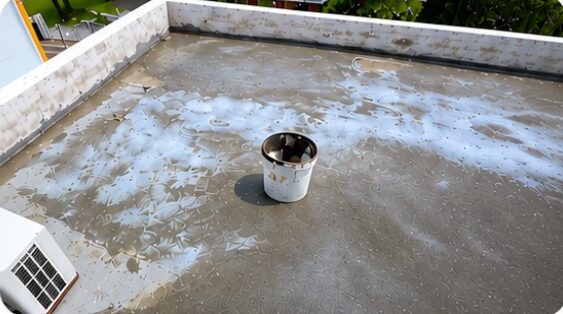
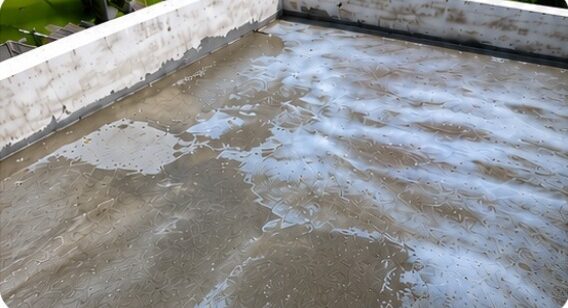
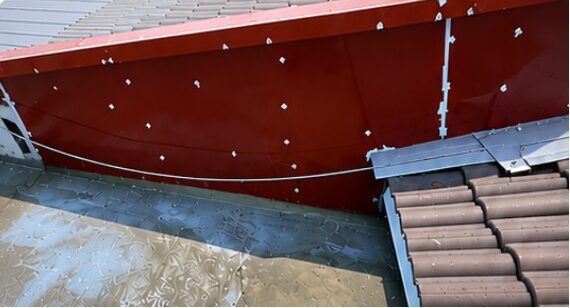
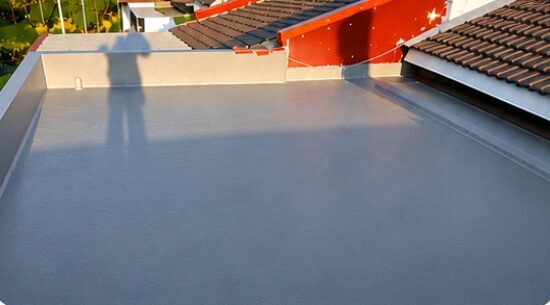
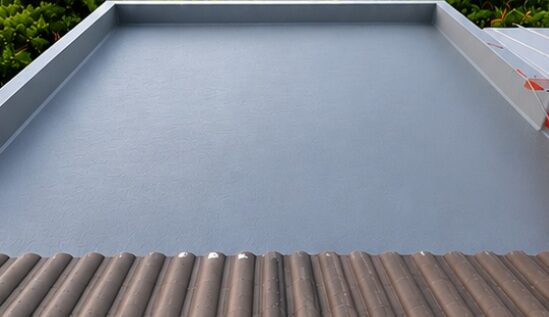
VROOF’s Bukit Tiram photographs show a concrete slab bounded by parapets, a junction beside an adjoining tiled roof and different views of the slab surface. The photographs do not establish the order of work, the product used or any test result.
For more about VROOF’s concrete roof slab waterproofing service, see the service guide.
If you are unsure where water is collecting or entering your roof, you can send VROOF a brief description and photos on WhatsApp.